
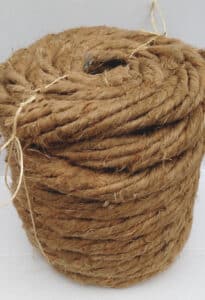
Oakum is a fibrous material that has traditionally been used in shipbuilding, plumbing, and other water control applications. Polyurethane-soaked oakum it can prove to be a very affordable, yet effective way for installers to address a leaking joint. The following is a recommended procedure for the use of polyurethane-soaked oakum to address leaks in larger cracks and joints.
The oakum should be Mountain Grout Dry Oakum. Do not use oil soaked oakum or bentonite impregnated oakum. Neither type effectively absorbs the liquid resin.
- Place approximately one gallon of Mountain Grout Polyurethane resin in a clean, dry 5 gallon pail. For a faster reaction profile, mix a pint of Mountain Grout Accelerator in with the resin.
- Place approximately 2 to 3 feet of Mountain Grout Oakum in the resin. Fully submerge the oakum in the resin.
- Remove the oakum and “strip” the excess resin back into the pail.
- If the crack or joint is producing active water, go to the next step. If area is dry it may be necessary to wet the area in order to provide the necessary moisture to activate the polyurethane.
- Next, place the oakum in the joint or crack and pack tightly with a 5 in 1 tool or wooden wedges.
- Finally, allow 3 to 4 hours for the polyurethane to fully cure before removing any excess reacted polyurethane from surrounding surfaces.
 This method, while considered by some to be “low tech,” is a very effective solution and provides a long term solution to leaking joints or cracks. Applications don’t always have to be complicated to be effective!
Installers must employ all necessary safety steps while using this polyurethane grouts. In addition, read and understand the information provided in the Safety Data Sheet (SDS). Safety measures should include rubber gloves, eye protection and long sleeve shirt along with any other suggestions contained in the SDS.
Recent Comments