
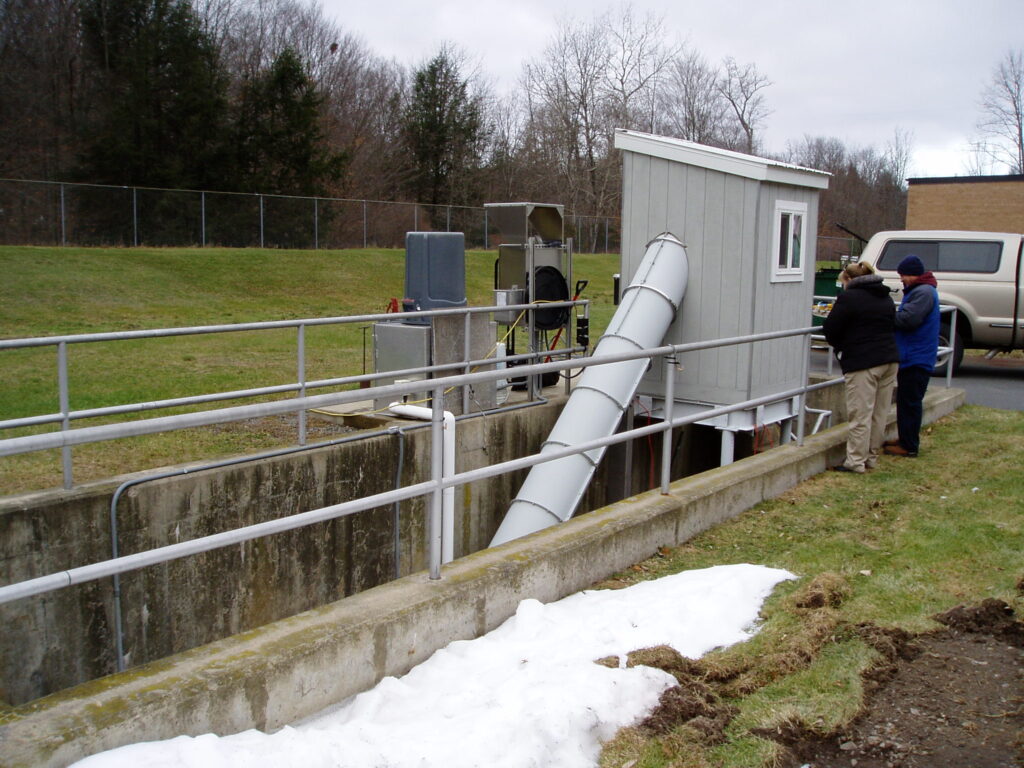
The successful injection of any leaking crack requires experience and attention to detail. Cold weather injection increases the need for additional precautions and patience. The expansion and curing of the polyurethane grout is a chemical reaction and is, therefore, impacted by temperature. Colder temperatures will slow the reaction and warmer temperatures will speed the reaction. A cold substrate (concrete wall) will act as a heat sink and will slow the reaction further. Slower reaction times are not always a problem, they are often a goal. However, if installers are concerned about the injected resin washing out of the crack before it can react, they can take certain measures to avoid it.
First and foremost, the effects of cold temperatures can be minimized by raising the Accelerator level (up to 5 %) and having the grout warm (over 70 F) as it is pumped. Heat bands can be used to keep the polyurethane resin temps between 70 F and 90 F. Some contractors have used space heaters. Others have injected warm water through the bore holes and cracks to warm that area of the wall. Under no circumstances should a crack be injected that has ice within the crack. Flushing the cracks prior to cold weather injection is part of the standard injection procedure and is very important when the crack is dry and the temperature is low. Obviously, this should not be done when the temperature is below freezing. Ice within the crack will inhibit travel of the resin and negatively impact adhesion.
The minimum recommended temperature for the concrete at the time of injection is 40 F. If you are working inside a tank that is below grade, that should not be a problem.
Recent Comments