
 We are often asked about injecting polyurethane in cold environments. While there are some challenges to injecting in cold environments, injections can certainly be accomplished with success. As long as there is no ice in the crack or joint, the product can be used successfully. If there is ice, the product will still react (eventually), but it will not bond well to the concrete. In some cases, hot water can pumped into the crack to flush any debris or ice within the leak path. In general, however, polyurethane may be used at any temperature above freezing.
Polyurethane resins are impacted by temperature in two key ways; 1) viscosity will increase as it gets colder and 2) the reaction profile will be extended, taking the product longer to cream and cure. Heating the material to 90°F will reduce viscosity and increase reactivity. Also, the addition of Mountain Grout Accelerator may be used to speed up the reaction. Polyurethane should not sit outside in freezing temperatures for very long. Electric band heaters, which are inexpensive and thermostatically controlled, are often employed by experienced installers.
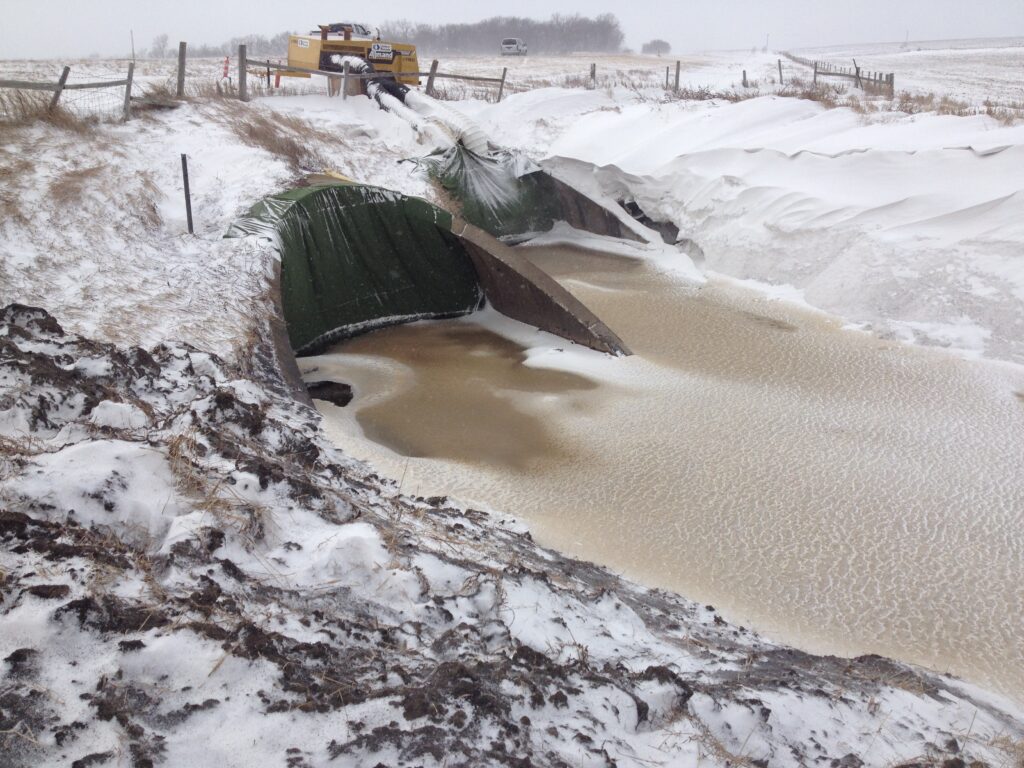
Experienced installers may also enclose tunnels or culverts, as can be seen in the photograph. This allows them to heat the workspace and maintain higher temps of both the resin and the concrete for more optimal performance. If this method is employed, installers should take care to make sure the space is adequately ventilated and take all precautions listed in the Safety Data Sheets for the products on the job site.
Recent Comments